
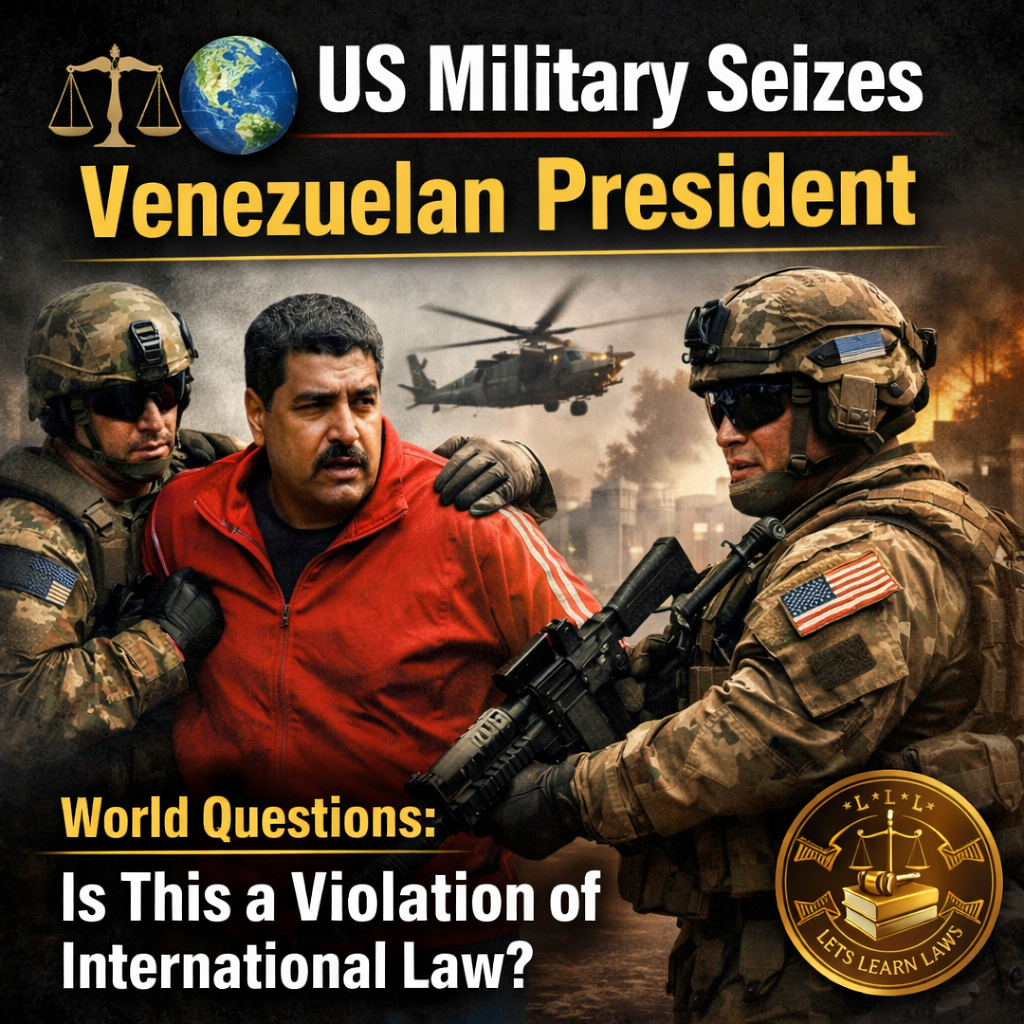
US Military Seizes Venezuelan President World Questions: Is This a Violation of International Law?
امریکی فوج کی جانب سے وینزویلا کے صدر کی گرفتاری
عالمی سوال: کیا یہ بین الاقوامی قانون کی خلاف ورزی ہے؟
The recent United States military intervention in Venezuela, which resulted in the capture of President Nicolás Maduro and his wife and their transfer to the United States for trial, has reignited a fundamental debate in international law. President Donald Trump’s assertion that the United States will “run” Venezuela until a new government is installed raises profound legal and political questions about state sovereignty, the use of force, and the durability of the international legal order.
At the center of this controversy is Article 2(4) of the United Nations Charter, which prohibits states from using or threatening force against the territorial integrity or political independence of another state. This rule, established after the devastation of the Second World War, was designed to prevent unilateral military action and to protect weaker states from domination by more powerful ones.
Under international law, the use of force is lawful only in limited circumstances: when authorized by the United Nations Security Council, when exercised in self-defense against an actual or imminent armed attack, or when carried out with the clear consent of the lawful government of the state concerned. In the case of Venezuela, there was no Security Council authorization, nor has there been any claim that Venezuela carried out or threatened an armed attack against the United States.
Some have argued that President Maduro’s government lacks legitimacy due to disputed elections. However, international law draws a clear distinction between political legitimacy and legal authority. The International Court of Justice has consistently held that disagreements over governance or electoral credibility do not justify military intervention. This principle was firmly established in the Nicaragua v. United States judgment, where the Court ruled that political disagreements cannot excuse the use of force or interference in another state’s internal affairs.
The United States has attempted to characterize its actions as a law enforcement operation, describing the Venezuelan president as a fugitive from American justice. Yet international law does not permit states to conduct military arrests of foreign heads of state under the guise of criminal enforcement. Criminal accountability is ordinarily pursued through extradition, international judicial mechanisms, or cooperative legal processes, not through unilateral military force on foreign soil.
Historical experience offers sobering lessons. The United States invasion of Panama in 1989, NATO’s intervention in Kosovo in 1999, and the invasion of Iraq in 2003 each demonstrate how powerful states have stretched or bypassed international legal norms, often facing condemnation and long-term political and legal consequences. These episodes weakened respect for the UN Charter and contributed to skepticism about the effectiveness of a rules-based international order.
The danger of such actions lies not only in the immediate conflict but also in the precedent they establish. If unilateral military interventions become normalized, the international system risks sliding back into a power-based order in which military strength determines legality. This development would be particularly damaging for developing and smaller states, whose sovereignty depends heavily on the continued enforcement of international legal constraints.
Ultimately, the intervention in Venezuela is not merely a regional or political dispute; it is a critical test of whether international law continues to restrain the use of force or yields to geopolitical expediency. The outcome of this debate will shape not only the future of Venezuela but also the credibility and relevance of the international legal order itself.
وینزویلا میں حالیہ امریکی فوجی مداخلت، جس کے نتیجے میں صدر نکولس مادورو اور ان کی اہلیہ کو گرفتار کر کے امریکہ منتقل کیا گیا، نے بین الاقوامی قانون کے دائرے میں ایک بنیادی اور سنجیدہ بحث کو دوبارہ زندہ کر دیا ہے۔ امریکی صدر ڈونلڈ ٹرمپ کا یہ کہنا کہ نئی حکومت کے قیام تک امریکہ وینزویلا کو “چلائے گا”، ریاستی خودمختاری، طاقت کے استعمال اور عالمی قانونی نظام کی حیثیت سے متعلق گہرے قانونی اور سیاسی سوالات کو جنم دیتا ہے۔
اس تنازع کی بنیاد اقوامِ متحدہ کے چارٹر کے آرٹیکل 2(4) میں پیوست ہے، جو کسی بھی ریاست کے خلاف اس کی علاقائی سالمیت یا سیاسی آزادی کے خلاف طاقت کے استعمال یا اس کی دھمکی کو صراحتاً ممنوع قرار دیتا ہے۔ یہ اصول دوسری عالمی جنگ کی تباہ کاریوں کے بعد وضع کیا گیا تھا تاکہ یکطرفہ فوجی کارروائیوں کو روکا جا سکے اور کمزور ریاستوں کو طاقتور ممالک کے غلبے سے تحفظ فراہم کیا جا سکے۔
بین الاقوامی قانون کے تحت طاقت کا استعمال صرف مخصوص اور محدود حالات میں جائز سمجھا جاتا ہے، یعنی جب اقوامِ متحدہ کی سلامتی کونسل اس کی اجازت دے، جب کسی حقیقی یا فوری مسلح حملے کے جواب میں دفاع کے طور پر اقدام کیا جائے، یا جب متعلقہ ریاست کی جائز حکومت کی واضح اور غیر مبہم رضامندی موجود ہو۔ وینزویلا کے معاملے میں نہ تو سلامتی کونسل کی کسی قرارداد کے ذریعے فوجی کارروائی کی اجازت دی گئی اور نہ ہی امریکہ کے خلاف کسی مسلح حملے یا فوری خطرے کا کوئی دعویٰ سامنے آیا۔
یہ مؤقف اختیار کیا گیا ہے کہ متنازع انتخابات کے باعث صدر مادورو کی حکومت کو قانونی جواز حاصل نہیں۔ تاہم بین الاقوامی قانون سیاسی جواز اور قانونی اختیار کے درمیان واضح فرق کرتا ہے۔ عالمی عدالتِ انصاف نے متعدد فیصلوں میں یہ اصول قائم کیا ہے کہ حکومت کی ساکھ یا انتخابی عمل پر اعتراضات کسی ریاست کے اندرونی معاملات میں فوجی مداخلت کا جواز فراہم نہیں کرتے۔ نکاراگوا بمقابلہ امریکہ کے تاریخی فیصلے میں عدالت نے واضح کیا تھا کہ سیاسی اختلافات یا نظریاتی تنازعات طاقت کے استعمال یا ریاستی خودمختاری میں مداخلت کی اجازت نہیں دیتے۔
امریکی انتظامیہ نے اپنی کارروائی کو قانون نافذ کرنے کی ایک کوشش قرار دیا ہے اور وینزویلا کے صدر کو امریکی انصاف سے مفرور قرار دیا ہے۔ تاہم بین الاقوامی قانون کسی بھی ریاست کو یہ حق نہیں دیتا کہ وہ کسی دوسرے ملک کے سربراہِ مملکت کو فوجی طاقت کے ذریعے گرفتار کرے۔ فوجداری ذمہ داری کے تعین کے لیے عام طور پر حوالگی کے معاہدے، باہمی قانونی تعاون یا بین الاقوامی عدالتوں کا سہارا لیا جاتا ہے، نہ کہ یکطرفہ فوجی کارروائیوں کا۔
تاریخ اس حوالے سے واضح اور سبق آموز مثالیں فراہم کرتی ہے۔ 1989 میں پانامہ پر امریکی حملہ، 1999 میں کوسوو میں نیٹو کی مداخلت، اور 2003 میں عراق پر حملہ ایسے واقعات ہیں جن میں طاقتور ریاستوں نے بین الاقوامی قانونی اصولوں کو نظرانداز کیا، جس کے نتیجے میں عالمی سطح پر تنقید اور طویل المدتی سیاسی و قانونی اثرات سامنے آئے۔ ان اقدامات نے اقوامِ متحدہ کے چارٹر کی بالادستی کو کمزور کیا اور قواعد پر مبنی عالمی نظام پر اعتماد کو نقصان پہنچایا۔
اس نوعیت کی فوجی کارروائیوں کا خطرہ صرف فوری تنازع تک محدود نہیں بلکہ اس مثال میں مضمر ہوتا ہے جو یہ آئندہ کے لیے قائم کرتی ہیں۔ اگر یکطرفہ فوجی مداخلت کو معمول بنا لیا جائے تو عالمی نظام دوبارہ طاقت کے قانون کی طرف لوٹ سکتا ہے، جہاں قانون کا نہیں بلکہ قوت کا راج ہو۔ یہ صورتِ حال خاص طور پر ترقی پذیر اور کمزور ریاستوں کے لیے شدید خطرات رکھتی ہے، جن کی خودمختاری کا انحصار بین الاقوامی قانونی تحفظات پر ہوتا ہے۔
بالآخر، وینزویلا میں امریکی مداخلت محض ایک علاقائی یا سیاسی تنازع نہیں بلکہ یہ اس بات کا فیصلہ کن امتحان ہے کہ آیا بین الاقوامی قانون واقعی طاقت کے استعمال کو روکنے کی صلاحیت رکھتا ہے یا عالمی سیاست کی وقتی ضرورتوں کے آگے پسپا ہو جاتا ہے۔ اس بحث کا نتیجہ نہ صرف وینزویلا کے مستقبل بلکہ پورے عالمی قانونی نظام کی ساکھ اور افادیت کا تعین کرے گا۔